





What is a shackle?
Shackles are the indispensable link between lifting gear, but can also be used as independent lifting gear between the load being lifted and the crane itself. At Fyns Kran Udstyr, as you know, we have a very large selection in our range of shackles, but we can also provide all types of shackles regardless of size - even many thousands of tonnes.
Are there shackles that must not be used for lifting?
Yes! Shackles referred to as 'commercial grade shackles' may NOT be used for lifting. If a shackle is to be used for lifting, it must be marked with WLL (lifting capacity), manufacturer, steel classification, etc. You can see more about the subject in the video further down the page.
Should shackles also be inspected every 12 months?
The short answer is yes. Shackles, like all other lifting equipment, must be inspected at least once every 12 months, according to the Danish working environment authority's order no. 428. Do you have questions about shackles? So, as always, you are welcome to contact us on +45 70 15 20 15 or write to us at fku@fku.dk - we are ready to answer your questions, help put together your solution.
What types of shackles are there?
As a starting point, shackles are divided into two types:
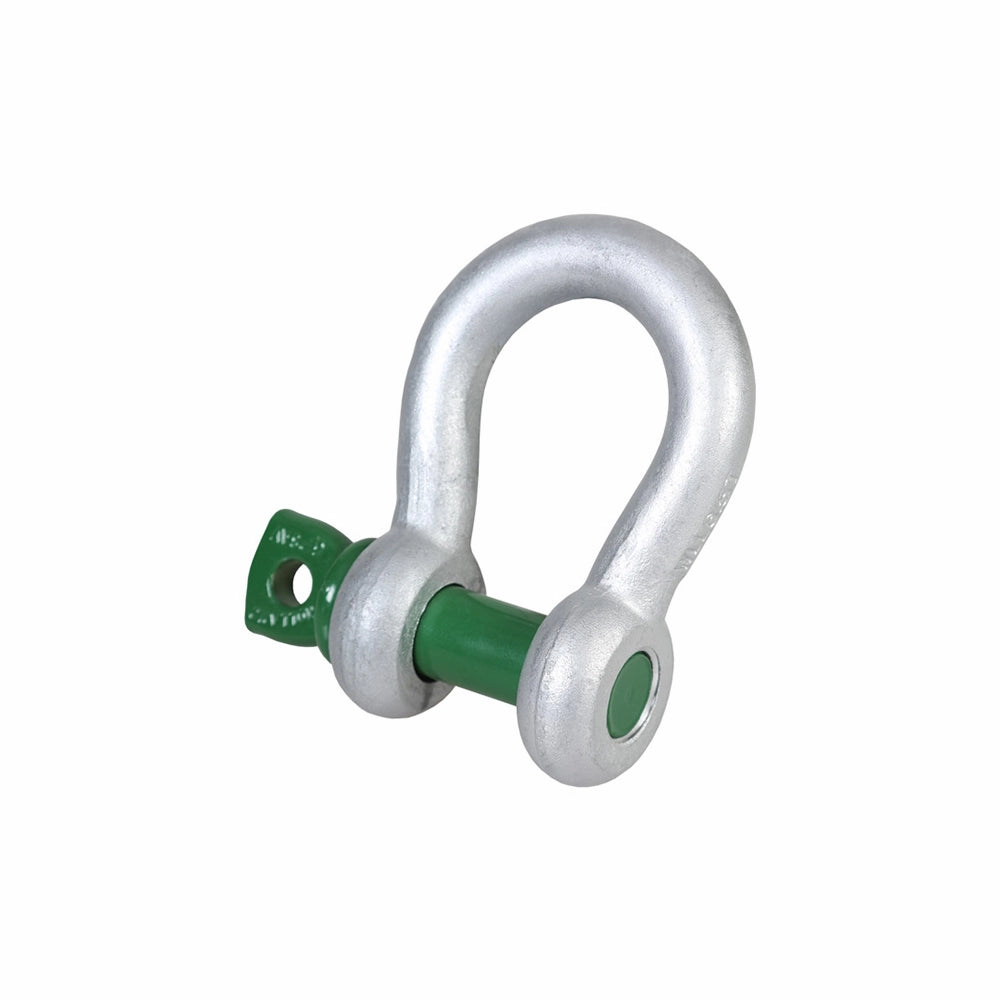
With screw pin (class 2) – This is the 'quick' type where you can easily insert or remove the screw pin, e.g. right after your lift and then rig a new load.
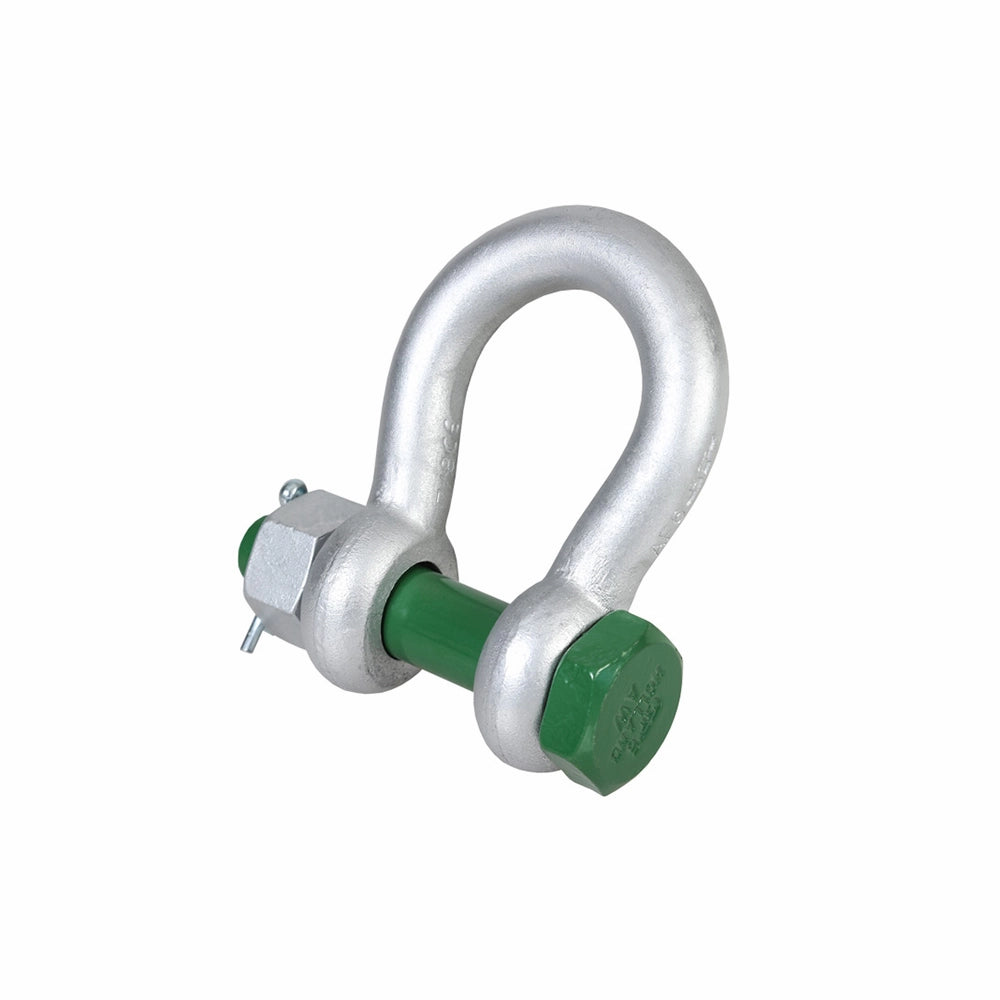
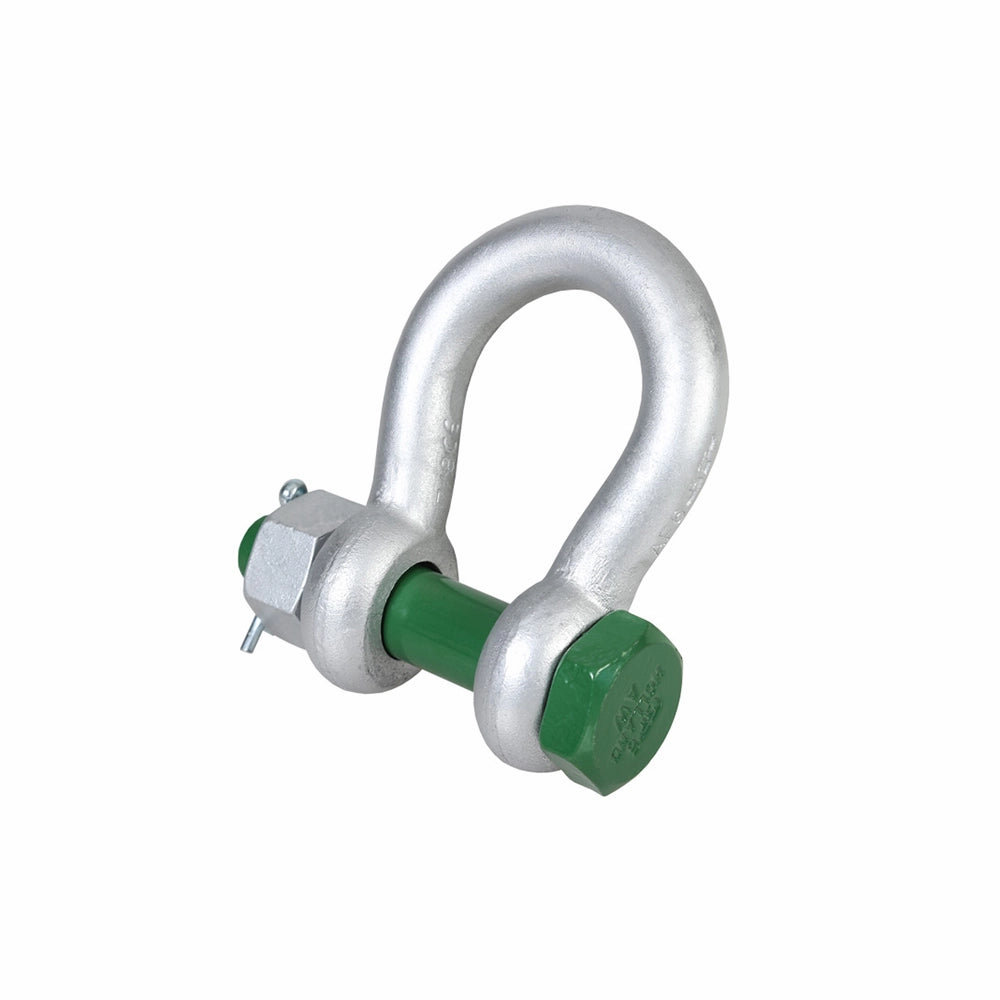
With bolt, nut and cotter pin (class 3) – This is the type where you know in advance that the shackle must not be dismantled immediately. The nut ensures that there is no risk of the screw pin loosening. Conversely, the nut also extends the assembly and disassembly time when rigging.
However, there are also shackles designed specifically for use with e.g. round sling or wire rope slings called 'sling shackles' or 'wide body' shackles. In addition, there are also shackles with a swivel function, for ROVs under water and much more!
What must my shackle be marked with and how do I lift correctly?
Watch this video with our sales consultant Frank Nørlem, where he explains how your shackle should be marked, as well as giving tips on how you can lift with your shackles.
In the video, Frank Nørlem gives us a small checklist of what things a shackle must be marked with: WLL, CE mark, identification, manufacturer e.g. with a logo, as well as a traceability code or batch number.
FAQ:
What is the difference between a shackle with a screw pin and one with a nut?
A shackle with a screw pin (Class 2) is designed for applications where the shackle needs to be frequently installed and removed. It is quick to work with and ideal for daily use in production. A bolt-and-nut shackle (Class 3) is intended for more permanent installations, or where there is a risk that the load could rotate and loosen a standard screw pin. The nut is further secured with a split pin for maximum safety.
Can I use a commercial shackle for lifting?
No, commercial shackles are intended exclusively for light lashing tasks or securing and must under no circumstances be used for lifting. A shackle intended for lifting must always be clearly marked with the WLL (Working Load Limit), the manufacturer’s name, steel grade, and a CE mark.
What is a “wide body” shackle?
A wide body shackle (also called a sling shackle) has a wider shackle body than a standard shackle. It is designed specifically for use with round slings or lifting straps, as the wider shackle distributes the load more evenly across the textile lifting gear, thereby reducing wear and extending its service life.
